
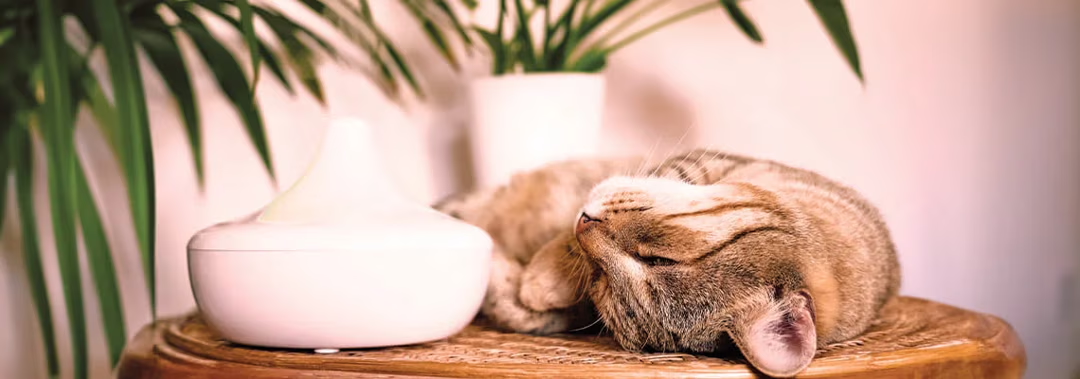
Pet Friendly Essential Oils
Although essential oils are natural plant extracts, they are not automatically safe for pets and should be used with great caution. Animals—especially cats, dogs, and smaller or more sensitive species—have far more sensitive respiratory and nervous systems than humans, meaning even gentle aromas can cause irritation or adverse reactions. Oils such as Lavender and Chamomile are sometimes considered milder options, but safety depends heavily on species, dilution, and environment. Because risks can vary widely, expert veterinary guidance is strongly recommended before using essential oils around pets.
Are Essential Oils Safe for Pets?
Despite having natural plant origins, Essential Oils are not always entirely safe for use on or around pets, and each Essential Oil that is considered to be relatively “safe” should also be used with extreme care. If using Essential Oils, whether applying them topically or diffusing them throughout a room to promote sleep, immune function, relaxation, or for any other mental or physical improvement, ensure that thorough research is conducted regarding their benefits and side effects, especially when using them in pet care.
Pets, especially dogs and cats, have a heightened, more sensitive sense of smell compared to humans, thus many fragrances are potential irritants for them – similar to a person sitting next to someone whose cologne or perfume has an overpowering scent that inadvertently causes the feeling of being physically unwell – that could cause respiratory issues, skin reactions, allergies, and other consequences listed further down in this article; hence, many reports caution against using Essential Oils on pets younger than 10 weeks, while others suggest avoiding their use on all small pets, and still others suggest avoiding Essential Oils entirely for all pets, as topical products penetrate more easily through their sensitive skin as well as through their hair follicles. Furthermore, Essential Oils could potentially have harmful effects on their especially vulnerable chemosensory and nervous systems as well as on their immune, respiratory, and metabolic functions. For pet parents who would still like to use Essential Oils on pets, it is said that Hydrosols are a far superior choice in terms of safety, but these should also be avoided with particular pets, even in minute amounts.
It is of utmost importance to consult with a veterinarian before using Essential Oils on or near pets. In addition to this consultation, it is highly recommended to receive supplementary advice from a certified recognized, and reputable expert, such as an Animal Aromatherapist. In general, seek information from educated, impartial, and trustworthy sources. The combined expertise will help pet parents make well-educated decisions for the wellness of their pets as well as for the rest of the family. Essential Oils that seem not to have a harmful effect on one type of pet could have a distinctly opposite impact on the wellbeing of a different pet – so, even if your dog has a positive response to an oil, this does not mean the same oil should also be used on your cat, as cats have a greater number of stomach-related sensitivities in contrast with dogs.
It is also important to choose the safest variety of any given Essential Oil, as some varieties exhibit stronger properties that may be harmful compared to other, relatively milder varieties. This is where it would be highly beneficial to know the Latin botanical name of the markedly “safe” variety. Each Essential Oil exhibits diverse properties – even two oils from the same botanical, such as a “Leaf Oil” versus a “Bark Oil” can have vastly different effects on the pet’s body and on its senses. Not all Essential Oils will carry the same safeness as those that are widely used and believed to be safe for use on other pets or on humans, and those that are categorized as safe should still be handled with stringent safety measures.
When Essential Oils are introduced to the pet’s environment, the area in which it is used should be an open area with easy access to fresh air and from which the pet is free to leave. Essential Oils should be introduced one at a time in low doses in order to make it easy to spot the culprit in case of a potential allergic reaction. Keep a close eye on your pet when using Essential Oils on or around them, even if the Essential Oil is used on yourself, especially if you know you will be making physical contact with your pet. Any potential reactions could be experienced within the first 30 minutes of application, whether diffused or applied to the skin, or they can appear 24 hours after application. If your pet appears to be uncomfortable, anxious, or otherwise distressed or lethargic after the environment has been infused with an Essential Oil, immediately refrain from using this oil, remove the pet from this environment, take it to an area that is well-ventilated, and contact a veterinarian. Avoid topical application or diffusion of Essential Oils on or near caged pets, such as birds and rodents, as their confined spaces do not allow for an easy out if they become uncomfortable.
Always select Essential Oils that are 100% pure and, whenever possible, select ones that are Certified Organic to avoid exposure to harmful chemicals that could sometimes be used in the cultivation of the source botanical. Do not attempt to feed pets any Essential Oils or Carrier Oils.
The Most Common House Pets That May Be Sensitive to Essential Oils
- Birds
- Cats
- Dogs (especially “flat-faced” breeds, which might have respiratory difficulties)
- Fish
- Guinea Pigs
- Hamsters
- Rabbits
- Baby animals
- Pregnant animals
- Old animals
- Sick animals
- Feeble animals
- Small breeds of animals
ESSENTIAL OILS THAT ARE COMMONLY CONSIDERED SAFE FOR PETS
Here is your updated pet-safe oils block with “Shop Now” turned into a button-style link for each oil, using inline CSS so it stays Shogun-compatible and easy to paste: “`html
Essential Oils That Are Commonly Considered Safe For Pets
The Essential Oils that are considered to be gentle or “light” and which are thus most commonly used for pets are the oils below, due to the belief that they are more comfortably endured by vulnerable body systems.
Chamomile (German or Roman)
- Eases upset stomach
- Eases mental and emotional distress
- Calms the body and mind during times of nervousness, panic, restlessness, excitement, or hyperactivity
- Supports skin health
- Elevates the spirit when experiencing shyness, fear, irritability, anger, and other negative feelings
- Encourages restful sleep
- Encourages tranquility and a sense of well-being
Clary Sage
- Eases mental and emotional distress
- Calms the body and mind during times of nervousness, panic, restlessness, excitement, or hyperactivity
- Encourages tranquility and a sense of well-being
- Anti-bacterial and anti-fungal properties
Marjoram (Sweet)
- Eases mental and emotional distress
- Calms or decreases inflammation
- Reduces digestive discomfort
- Encourages sense of tranquility, relaxation, and confidence
- Anti-bacterial and anti-fungal properties
- Calms the body and mind during times of nervousness, panic, restlessness, excitement, or hyperactivity
- Elevates the spirit when experiencing shyness, fear, irritability, anger, and other negative feelings
Marjoram (Sweet)
- Eases mental and emotional distress
- Calms or decreases inflammation
- Reduces digestive discomfort
- Encourages sense of tranquility, relaxation, and confidence
- Anti-bacterial and anti-fungal properties
- Calms the body and mind during times of nervousness, panic, restlessness, excitement, or hyperactivity
- Elevates the spirit when experiencing shyness, fear, irritability, anger, and other negative feelings
Marjoram (Sweet)
- Eases mental and emotional distress
- Calms or decreases inflammation
- Reduces digestive discomfort
- Encourages sense of tranquility, relaxation, and confidence
- Anti-bacterial and anti-fungal properties
- Calms the body and mind during times of nervousness, panic, restlessness, excitement, or hyperactivity
- Elevates the spirit when experiencing shyness, fear, irritability, anger, and other negative feelings
Valerian
- Elevates the spirit when experiencing shyness, fear, irritability, anger, and other negative feelings
- Encourages restful sleep
- Eases mental and emotional distress
- Calms skin
- Supports wound healing
- Enhances digestive function
- Calms the body and mind during times of nervousness, panic, restlessness, excitement, or hyperactivity
Ginger
- Reduces discomfort of joint pain
- Enhances digestive function
- Promotes easy breathing
- Calms inflammation
- Eases mental and emotional distress
Cedarwood (Virginian)
- Discourages insects from approaching, thereby minimizing the chances of receiving bites
- Encourages sense of tranquility, relaxation, and security
- Supports skin health
- Calms the body and mind during times of nervousness, panic, restlessness, excitement, or hyperactivity
- Supports immune function
- Elevates the spirit when experiencing shyness, fear, irritability, anger, and other negative feelings
- Reduces pain, cramping, and spasms
- Stimulates circulation
Despite the generalizations that are made about the relative safeness of many Essential Oils mentioned in this article, it is important to keep in mind that every animal’s biological makeup is unique and products will interact differently from species to species; accordingly, the physical response will depend on the specific pet. Pet owners who are uncertain or reluctant to use a “safe” oil on or near their pets should disregard the safe lists and follow their own instincts.