
HELLO HERB! Herbal Profile: Black Cohosh
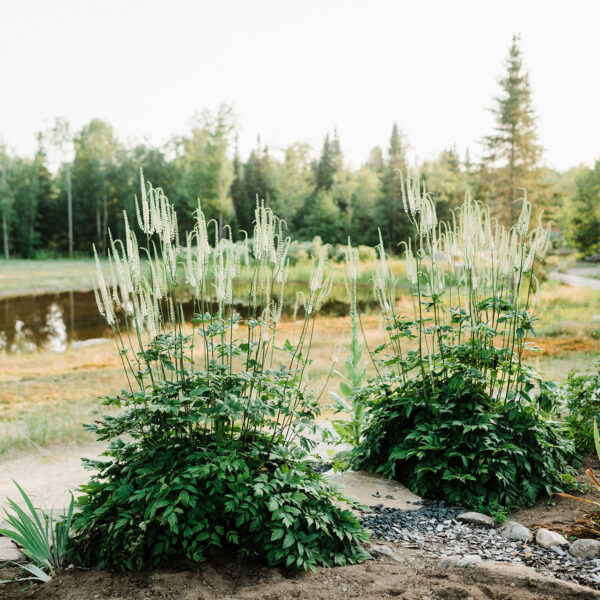
Black cohosh (Actaea racemosa) is a perennial flowering herb that is a member of the buttercup (Ranunculaceae) family. It bears characteristic spikes of small, white, fragrant flower clusters called “racemes”. Plants can grow up to 4 to 6 feet in height and take about 3 years to mature.
Common names: black cohosh, black bugbane, black snakeroot, rattle-top, or fairy candle.
The name “cohosh” is thought to be derived from Algonquian (Eastern Abenaki / Penobscot) ‘*kkwὰhas’, meaning ‘rough’, possibly in reference to its leaves or flowers.
Black cohosh was exported to Britain for flower gardens in the early 18th century, but its true medicinal value gained recognition among wider American-European populations in the 19th century.
Distribution: Native to eastern North American woodlands from southern Ontario and Quebec down to Georgia.
Medicinal parts: roots and rhizomes
Therapeutic compounds: Triterpene glycosides, phenolic compounds, Salicylic acid.
Main Therapeutic action:
Traditionally, black cohosh was used by indigenous North Americans to treat snake bite, fever and aches and pain, along with being used to help support women during labour and menstrual discomfort.
Women’s Hormonal Health
With active anti-inflammatory, analgesic and antioxidant compounds, black cohosh has a variety of medicinal applications. It is best known for its beneficial effects on women’s hormonal health. Studies have found among perimenopausal/menopausal women, black cohosh can help to reduce the severity of hot flashes, irritability and sleep disturbances.
Black cohosh can be helpful in treating PMS and painful periods including menstrual cramping.
Preparations of black cohosh have also been found to help ease anxiety, musculoskeletal pain and nervous tension.
Folklore: Black cohosh is associated with protection, love and warding off negative energies. It also is considered to hold feminine energy, symbolizing empowerment, growth and transformation.